Disposal and load rules in Brampton
A removal job includes checking where the actual material and loaded vehicle can be accepted.
Disposal restrictions for Brampton loads
Peel runs Community Recycling Centres, usually called CRCs, with rules for the material, its origin and the vehicle bringing it.
A nearby facility can still refuse the vehicle or material in a load.
When requesting a cleanout, describe furniture, appliances and construction material separately so the disposal arrangement can be checked before the work is agreed.
The receiving location depends on the material and vehicle, so it is checked with the pickup details before booking.
Source: Peel Region, Brampton CRC
Vehicle length and total loaded weight
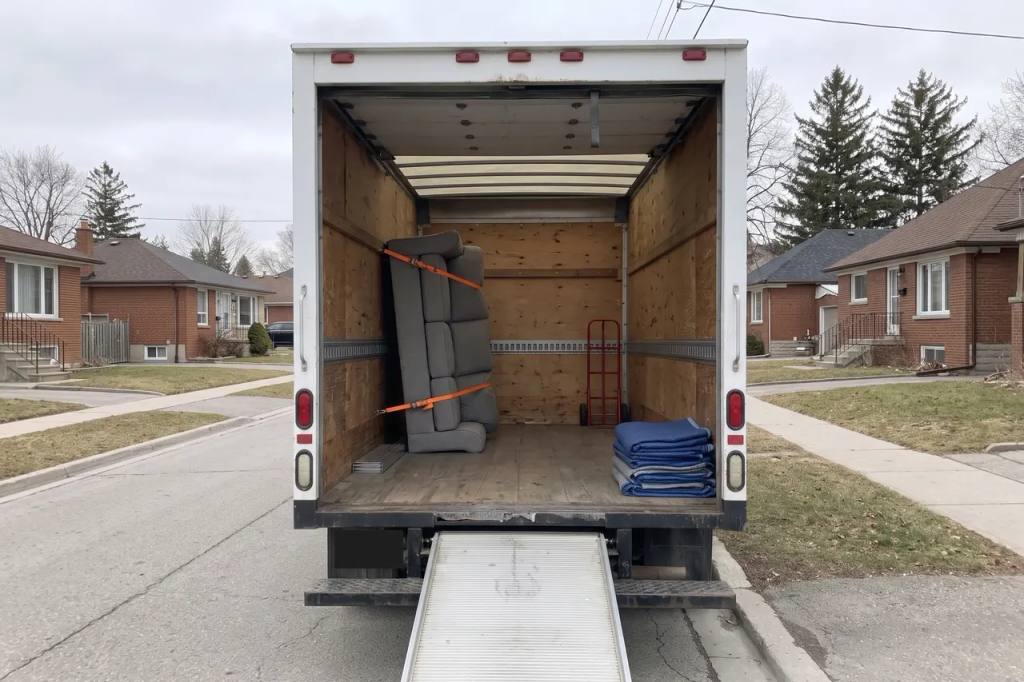
Peel lists box trucks and cube vans up to 5 metres, or 16 feet, long among acceptable vehicles.
It also requires the combined weight of the vehicle and load to be less than 5 tonnes.
A pile of tile or concrete can affect loaded weight well before it fills the available space in a truck.
Peel lists dump trucks, stake trucks, roll-off trucks, garbage packer trucks and tractor trailers as unacceptable at all CRC locations.
Small tip trucks are accepted only at Fewster, under a separate length limit.
Name dense waste and large appliances before the vehicle and disposal route are agreed.
The load must come from Peel
All waste and recyclables taken to a Peel CRC must originate in Peel.
For contractors, the published proof requirement is a signed contract or work order with a Peel address that references the company vehicle.
An address in a nearby municipality is not interchangeable with a Brampton address for this purpose.
Give the actual pickup address and unit number with the removal request, including a separate entrance if that is how the load will leave.
If items are being collected from more than one property, identify each location before the job is confirmed.
Securing and unloading the material
Peel requires loads to be properly secured and materials to go into the appropriate bins.
CRC employees can choose whether to unload items from a vehicle, so staff help cannot be assumed as part of a disposal plan.
The rules also prohibit standing on walls or guardrails while unloading.
Those requirements matter when an item is heavy, has loose parts or is mixed with material that belongs in a different bin.
Tell us about a glass cabinet top, loose shelving, long trim and damaged frames before the pickup so the handling can be confirmed.
A furniture load and a pile of loose renovation debris need different descriptions even when both occupy the same garage bay.
Restricted materials in a cleanout
Peel's accepted-materials page says asbestos is not accepted and insulation must be double bagged.
Household hazardous liquids have separate limits, including a maximum daily quantity and container size.
Those residential conditions do not establish that a contractor can add unknown chemicals to an ordinary furniture load.
Identify paint, solvents, damaged cooling equipment and anything you cannot name before the visit.
PlaceReady confirms suitable items and special handling in advance, following the main company service description.
A quote request for general junk removal should not be treated as approval to remove every container on a workshop shelf.
Weighing and unloading a load
Both close on Remembrance Day and statutory and provincial holidays.
The disposal trip must fit the facility's receiving restrictions as well as the property's loading window.
Peel charges for certain waste loads by weight and requires payment by debit, VISA or MasterCard.
We do not publish a disposal rate as a quote for your cleanout because the items, handling and access still need to be checked.
Send your preferred date with the load description so timing can be agreed in writing before booking.
Source: Peel Region, Heart Lake CRC
What we need for your written quote
List the large pieces, the type of material inside bags and any waste still fixed to the building.
Tell us about stairs, an elevator reservation and the location where a truck is allowed to load.
If sorting reveals more material after the first request, send the change before the pickup details are finalized.
PlaceReady includes any extra pickup trip in the written quote before making that trip.
Sources for this page
- Peel Region, Brampton CRC
- Peel Region, Heart Lake CRC
- Peel Region, CRC load and vehicle rules
- Peel Region, accepted CRC materials
- Peel Region, household hazardous waste
- Peel Region, CRC disposal charges
Sources checked on 15 November 2026, with the original reference year kept for neighbourhood figures.
Questions about disposal and load rules
What restrictions apply to a load from Brampton?
Peel runs Community Recycling Centres, usually called CRCs, with rules for the material, its origin and the vehicle bringing it.
A nearby facility can still refuse the vehicle or material in a load.
When requesting a cleanout, describe furniture, appliances and construction material separately so the disposal arrangement can be checked before the work is agreed.
Source: Peel Region, Brampton CRC
What vehicle length and weight does Peel allow?
Peel lists box trucks and cube vans up to 5 metres, or 16 feet, long among acceptable vehicles.
It also requires the combined weight of the vehicle and load to be less than 5 tonnes.
A pile of tile or concrete can affect loaded weight well before it fills the available space in a truck.
What proof is needed to show a load came from Peel?
All waste and recyclables taken to a Peel CRC must originate in Peel.
For contractors, the published proof requirement is a signed contract or work order with a Peel address that references the company vehicle.
An address in a nearby municipality is not interchangeable with a Brampton address for this purpose.
Describe the whole load
Include the dense materials and special-handling items in the first request.