Renovation debris removal in Brampton
Describe the material as well as the size of the pile, because a few bags of tile can be a heavy load.
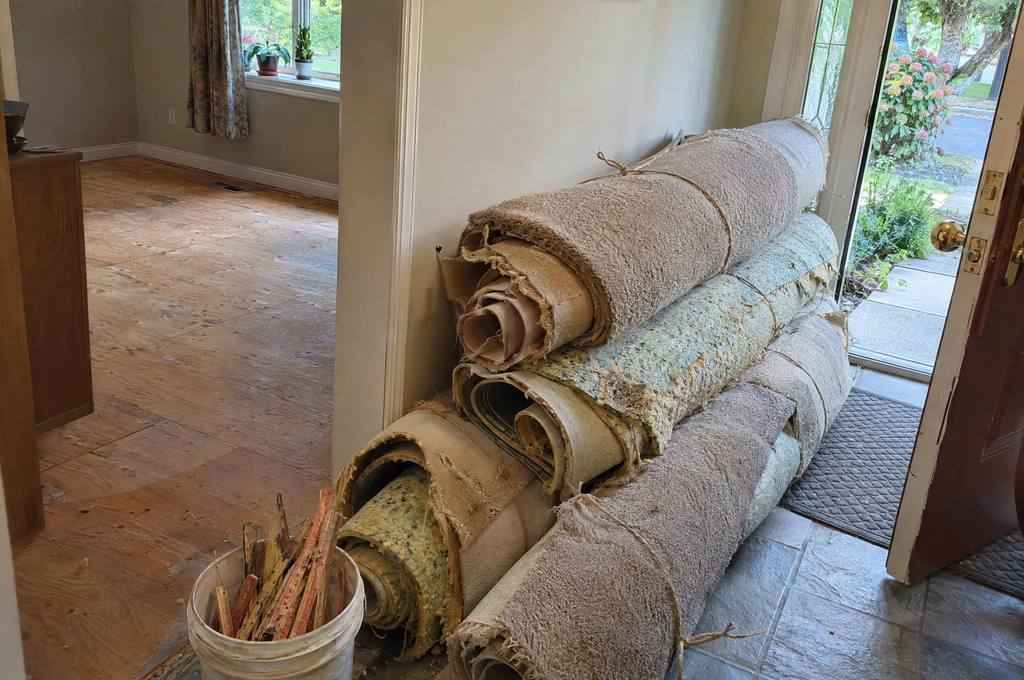
Removed material ready for a pickup
Tell us about old cabinets, carpet, wood offcuts and other renovation debris you want quoted for removal.
We check the material and pickup details before agreeing on the work, using PlaceReady's process for property and restoration cleanouts.
Identify what is already detached and what remains fixed to the building so a debris pickup is not confused with demolition.
A cabinet run on the driveway needs a different description from cabinets still hanging on the kitchen wall.
Include the location of the pile and whether any of it is inside an occupied part of the house.
Weight, sharp edges and loose parts
Tile, masonry and concrete weigh much more than their volume suggests, so they need to be identified before a truck load is agreed.
Describe the material inside bags and containers instead of listing everything as renovation waste.
Long trim can have nails at the back, while broken cabinet panels can expose screws and splintered edges.
Tell us if loose glass, a countertop or a detached sink is mixed into the pile.
A carpet roll may have wet underpad beneath it, which changes the weight and handling.
Include the length of long pieces when they have to turn through a doorway or pass between a house and a fence.
What Peel excludes and requires
Peel's bulky-item schedule excludes construction, demolition and renovation waste.
Its CRC accepted-materials page requires insulation to be double bagged and states that asbestos is not accepted.
The carpet rules in the bulky-item schedule limit bundles to 1.2 metres long, 0.76 metres wide and 20 kilograms.
These are regional restrictions, so a loose mixed renovation pile should not be assumed to meet collection requirements.
Describe the load so we can confirm accepted materials and their handling before the visit.
Materials that need a separate decision
Tell us about paint, chemicals, suspected asbestos, needles, sharp objects or any unknown material before the visit.
Do not break a suspect board or open an unknown container to make the description more detailed.
The company's main service asks for hazards to be disclosed so special handling can be settled before booking.
Hazardous material needs separate acceptance before a debris pickup is agreed.
If a renovation contractor is still working, tell us which part of the pile is ready to leave and which materials belong to that contractor.
Send the manager's access hours with the pickup request.
Loading and disposal in Brampton
Brampton's noise by-law restricts disturbing noise, and its parking rules require sidewalks and fire routes to remain clear.
Describe a loading position with enough room to carry material while the boulevard and shared walkway remain clear.
Peel CRCs require loads to originate in Peel and set limits on vehicle length and total loaded weight.
The contractor proof requirement includes a signed contract or work order showing a Peel address and referencing the company vehicle.
Those conditions are part of checking the destination for a load, and the nearest CRC is not automatically suitable for every truck or material.
Send the complete material list so the written quote can address the actual removal.
Related work and Brampton access
Sources for this page
- Peel Region, waste collection by-law schedules
- Peel Region, accepted CRC materials
- Peel Region, CRC load and vehicle rules
- City of Brampton, Noise By-law 93-84
- City of Brampton, parking enforcement
Sources checked on 15 November 2026, with the original reference year kept for neighbourhood figures.
Questions about renovation debris removal
Does the request need to distinguish loose debris from attached fittings?
Tell us about old cabinets, carpet, wood offcuts and other renovation debris you want quoted for removal.
We check the material and pickup details before agreeing on the work, using PlaceReady's process for property and restoration cleanouts.
Identify what is already detached and what remains fixed to the building so a debris pickup is not confused with demolition.
What details matter for bags of sharp or heavy waste?
Tile, masonry and concrete weigh much more than their volume suggests, so they need to be identified before a truck load is agreed.
Describe the material inside bags and containers instead of listing everything as renovation waste.
Long trim can have nails at the back, while broken cabinet panels can expose screws and splintered edges.
Which Peel restrictions affect renovation material?
Peel's bulky-item schedule excludes construction, demolition and renovation waste.
Its CRC accepted-materials page requires insulation to be double bagged and states that asbestos is not accepted.
The carpet rules in the bulky-item schedule limit bundles to 1.2 metres long, 0.76 metres wide and 20 kilograms.
Describe the debris
Name the materials, where they are and whether they are already detached.